Desert Online General Trading LLC
Dubai, United Arab Emirates
Desert Online General Trading LLC
Dubai, United Arab Emirates

Full description not available
C**R
A Wonderful Book and A Great Read
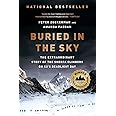
This is a wonderful book, well researched, carefully documented, absolutely accurate and beautifully written and edited. It is a true adventure that takes the reader into the world of climbing Nepali Sherpas and Pakistani High Altitude Porters (HAPs), a world seldom experienced and little understood by westerners. We usually only hear about the westerners on the mountains and even in death most Eastern Sherpas and HAPs are not identified by name in news reports. The book weaves a true tale of tragedy, courage, and humanity about the most skilled climbers in the world who carry the rest of us to the top of unforgiving mountains inhabited by their goddesses. It is also the story of their culture, their families, and physiologically why they are especially adapted to climbing at high altitudes. This book leads us into their world.My husband and I have a personal interest in this story and have carefully followed the books published about the 2008 tragedy on K2 as Jumik and Tshering Bhote, Nepali Sherpa friends of ours, were on that mountain. They are brothers of Pemba, our lead Sherpa on our visits to Nepal. They have cared for us, driven us, guided us, and befriended us, as Sherpas do. Jumik lost his life when a serac fell on him. Tshering survived but will be forever marked by that terrible event as will his family, also friends of ours. I wish that I could say Jumik died in a place where he wanted to be doing what he loved; but, truthfully, he was doing what he could to provide for his family. People in that part of the world mostly live in abject poverty. Money can be made in the mountains, risky as climbing is. Jumik, and the other HAPs and Sherpas, do not climb for the love of climbing. They climb for money. Jumik was doing honorable work for honorable reasons, and this book honors his memory as well as all of those Sherpas and HAPs who were on the mountain that day. It tells the story of terrible death and great heroism and why these skilled mountaineers climb. It introduces us to their humanity as well as ours.I urge you to enter this world through the eyes of Amanda and Peter. You will be glad you did.
K**D
Interesting
I found this a well written and researched book on all that goes on with a big mountain climb. It shows the selfishness of those whose only goal it to get to the top and forget the humanity of it all. Those who pay to go up dismiss the people that make it possible to get there and even worse, don't think that it is worth helping them when the porters are in trouble. It exposes mountain climbing in this day and age for what it is now, self absorbed people spending a lot of money on a rediculous goal. I hope it serves as a wake up call for those who continue to climb. It is not the climbing it is the loss of caring for others that is dsturbing. There are many heroes in this book as well and nice to give them credit, many lost their lives helping others.A great concise read for those who want to know what happened on K2 that year.
P**R
Shipped fast, great condition, exciting story
I ordered this for myself, but my sister was with me when it arrived (very fast delivery) and asked if she could read it first. Since she is a super-fast reader, I let her take it. She read it in three days in the evening while we were trying to get her house ready for sale. She said it was extremely interesting and well documented. It told the story from numerous points of view from many of those who were personally involved in the incident. She's actually read several books on this subject and said this was the most comprehensive and interesting one yet. I can't wait to get it back from her to read myself. If I don't agree with her impressions, I will post an update.
A**D
If you liked "Into Thin Air," you will love this book. IMO the definitive account of the 2008 K2 tragedy.
I picked up this book after watching the documentary film "The Summit."The book starts off with a history and description of Sherpa culture and beliefs as well as a look into the culture of Pakistani porters. The protagonists are a few Pakistani high-altitude porters and Sherpas. I have to admit that I was put off by this, at first, because it's unusual for an adventure book to start from a non-Western point of origin. However, in retrospect I appreciate this a lot. I honestly had no idea that among there was so much diversity among the low-and-high altitude porters and would not have known this if this book started with a common, western point-of-view.After the history lesson of how western climbing ambitions transformed life in the Karakorum and Himalaya regions, the story of the tragedy finally took off. I believe the authors did a perfectly fine job recounting the events leading up to the tragedy as well as the aftermath. It answered some questions that the movie "The Summit" left hanging and it was just as exciting as "Into Thin Air." Overall, a very engaging read that I won't spoil here.I think one takeaway from this book is the spotlight put on the relationship between western climbers and the porter community. At first, I thought that the relationship was somewhat exploitative. I think this belief is widely-held; however, this book made me see that there is much more involved. No HAP or Sherpa is ever forced up a mountain. Good high-altitude porters are paid very high wages compared to the status quo to do these jobs and the decision to take jobs on dangerous peaks like K2, Nanga Parbat, etc, is not one made lightly by these men and their families.It seems that working at high-altitude for a Sherpa or HAP is much like a westerner working a high-risk job such commercial fishing, logging, etc. In the west, we don't ever think of that work environment as exploitative. These workers are paid to take the risk, know the risks, and definitely have made their own decisions.
Trustpilot
1 week ago
1 month ago